
Procurement software will come of age in 2026 thanks to new entrants bringing platforms to market that take advantage of advancements in technology and AI. Analysts are advocates for embracing procurement technology, seen as a way for businesses to reduce risk and ensure compliance through improved management of suppliers and contracts. With this comes increased visibility of spend data helping procurement leaders to establish areas in the business that can benefit from consolidation and savings.
The procurement technology market is changing
Small procurement teams are often overstretched trying to manage suppliers and contracts, risk and compliance, purely on spreadsheets and shared inboxes. Why? Because there is a perception that procurement technology is only for big companies. This is fueled by features a small team doesn’t need, hefty implementation and a price tag smaller businesses simply can’t afford.
This perception has been created by a market dominated by large enterprise solutions where one size really doesn’t fit all. There has been a real shortage of point solutions that provide scaling pricing designed to support a growing business. Until now.
There’s never been a better time to automate
Step back and look at your procurement team. Is it still managing suppliers, contracts, quotes, and company spending on spreadsheets and shared drives? No doubt, it’s a painful and protracted process keeping on top of renewals and contracts. Endless manual updates, version control issues, missed renewals, and hidden spend are the daily headaches that come with spreadsheet-based procurement.
Against a backdrop of transformative tech coming into the market, economic uncertainty and rising costs, now is a good time to review how ‘you’ve always done things’ and look at the way in which affordable procurement tech could help change your company’s growth trajectory.
But how do you choose the right one for a small organisation without over-buying features you’ll never use?
Do I need Procurement Software or Source to Contract Software?
Procurement software is a digital platform designed to automate and centralise a company’s entire end-to-end purchasing process from sourcing suppliers and issuing requests for quotes, through to contracting, processing invoices and making payments. It’s heralded as the way forward because it gives procurement teams, and their counterparts in finance and operations, visibility and control of spend, and supplier relationships and status.
But procurement software is BIG. It covers all eventualities in procurement and supply chain management, typically designed for enterprise environments, rather than scaling companies. For many SMEs, the breadth of functionality is superfluous to requirements. And procurement software at this level isn’t straight forward to use, for procurement teams or their suppliers.
Enter ‘source to contract ‘software, sometimes known as S2C. It meets the needs of small procurement teams looking to reduce their reliance on spreadsheets and emails to manage suppliers and contracts.
Unlike full enterprise procurement software, a good S2C solution will have been specifically designed by procurement experts to manage sourcing, contracting and management. It should be quick to deploy (no long implementations) and typically delivers a rapid return on investment.
If you are facing any of these challenges, then S2C could be the ideal solution:
- Lost or duplicated supplier records
- Missed contract expiry and auto-renewal dates
- Untracked spend and unclear savings
- Slow, manual quote and tender processes
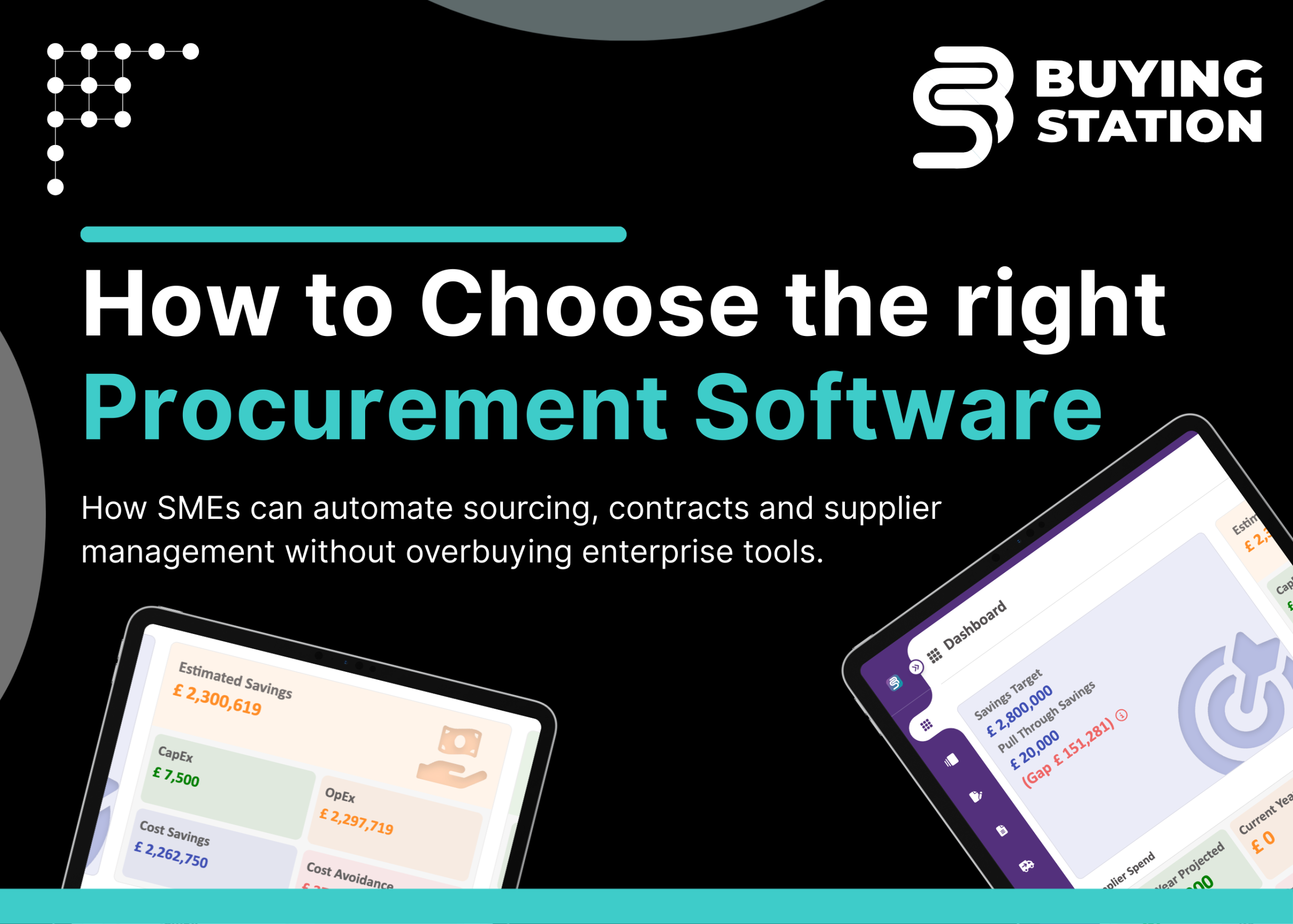
Today’s source to contract platforms take these pains away. They automate repetitive tasks like renewal reminders, workflows and approvals, centralise data and provide dashboards and insights on the pipeline, spend and savings. As a result, teams spend less time on admin and more time delivering strategic value.
Above all, software dedicated to mid-market sized companies, eliminates the patchwork of spreadsheets and silos that slow down procurement teams and increase risk. Automated tracking and reminders mean fewer missed deadlines, clearer audit trails and higher confidence in decision-making not just in procurement but across the business.
How do you Choose the Right Source to Contract Software?
Choosing the right S2C solution, involves balancing the team’s skill and strategic missions against the capability of the software, simplicity of use, and cost.
There are five areas of focus when drawing up a shortlist.
1. Look for “right-sized” functionality
As we’ve already seen, big enterprise solutions often bundle modules smaller teams and businesses will never use, yet they will charge for them anyway. It makes for a cumbersome user experience and a costly business case.
Small teams benefit most from using platforms that are designed for their specific needs with the essential features and nothing more included. Things like supplier management, contract storage, RFQ/tender workflows, spend dashboards and risk assessment tools should be on the shopping list.
BuyingStation’s source to contract solution, for example, offers all of these capabilities without adding unnecessary features and complexity to the user experience. It deliberately removes all the extra functionality 99% of small businesses don’t need and focuses on including all the features they do need!
Designed with growth in mind, BuyingStation offers tiered pricing allowing customers to increase their subscription to take advantage of additional features, when they are ready.
2. Ease of use is vital
Software that’s hard to use often fails to get adopted and certainly won’t be used to its full potential. Simple-to-navigate dashboards, intuitive workflows and easy to build report automations not only reduce training time but also boost long-term team adoption.
It’s also vital to ensure procurement teams can help better decision making across the business. It’s therefore worth considering how you can develop a strong business case for adopting S2C software by prioritising solutions that make it easier for everyone in the organisation to use, not just the specialists.
3. Automated workflows and notifications
Automation is core to saving time. Look for tools that automate reminders for contract renewals, reducing manual follow-ups and the risk of auto renewals. The time it frees up can be used to inform more strategic decisions and help the procurement teams identify opportunities to help the business improve profitability.
You may come across solutions that use AI. See this as a valuable attribute, not something to fear. AI will do time-consuming analysis, uncovering trends and options procurement teams may never have identified themselves.
4. Customisable without complexity
There’s nothing worse than finding your perfect source to contract solution only to find out it requires a full IT project to implement it and you have to change your processes to fit the way it works. ‘Plug and play’ and ‘configurable’ is what you need, and with the latest S2C solutions, this should come as standard.
Look for solutions that offer customisation of things like ‘fields’ so you can align categorisation with your business, custom onboarding questionnaires and configurable modules that fit your processes.
5. Scalability is key
Most importantly, choose a platform that will grow with you. Even if you’re a small team today, think about the strategic vision for the future. Tomorrow’s needs may include ESG tracking or expanded user access across the organisation. Your chosen solution should be able to scale accordingly and without a hefty price tag.
Excel isn’t enough anymore
Spreadsheets may still have their place in some functions, but procurement shouldn’t be run using them. Manual tracking, version control issues, and slow reporting aren’t just productivity drains, they reduce visibility and increase operating risk.
Source to contract procurement software brings clarity and control, letting you manage suppliers and spend on the things that matter, when they matter, with confidence.
For small organisations, the right platform is one that puts the tools you need right at your fingertips without forcing you to pay for functionality you’ll never use. Find that sweet spot and you’ll open the door to growth.
Why not watch our short video which shows you how you can increase efficiency and decrease risk by sourcing it, managing it and contracting it with BuyingStation.