
A guide for mid‑sized and scaling businesses who are considering replacing the headache of spreadsheets, shared drives and email to technology that will improve efficiency and visibility, save money and decrease risk for the business.
Mid‑sized businesses are under pressure from all directions. On one side, procurement complexity is increasing: more suppliers, more contracts, ESG compliance, more scrutiny from finance and the board.
Then there is the pressure of currency exchange rates, inflation, interest rates, wages, and economic uncertainty.
Whilst internally, budgets remain tight with all functions under scrutiny to do more with less without increasing risk.
Many procurement teams are simply not set up to manage these colliding forces, never mind position themselves as a strategic partner for the business.
The dependency on spreadsheets, emails and shared drives to source and manage suppliers and the associated contracts, is not a setup that thrives well under pressure and it’s certainly not fit to scale.
This mix of conflicts is leaving procurement teams exposed, with very few tools available to delve into the data and find patterns and trends that could unlock more cash for the business.
What can procurement leaders do?
They could do nothing. It’s always an option. But at some point, this approach will come unstuck.
They could look at enterprise-level procurement software. However, it’s become more apparent that it’s not suitable for scaling small to mid-sized companies. It’s bloated with features and functionality they don’t need, complex to use and comes with a high price tag that few can afford.
However, this challenge has brought about category innovation and new options for procurement leaders, namely ‘source to contract’ solutions. Unlike their enterprise-level counterparts, source-to-contract software or S2C, is designed to give SMEs exactly what they need for the job in hand. It is typically more affordable, and a good provider will also have tiered options, giving you the flexibility to scale to obtain greater features when you are ready.
In effect, source-to-contract software fills the gap between basic tools and heavyweight enterprise suites. It delivers structure, visibility and control without the cost, complexity or over‑engineering of enterprise procurement platforms. You can expect both operational and strategic benefits:
- Work faster and with fewer errors
- Have better insight for decision-making
- Increase efficiency through better collaboration across functions and less manual spreadsheet work
- Reduce the risk of contracts either auto-renewing or expiring when you do not want them to
- Provide the insight for better commercial decisions and become an advisor to the Office of the CFO
- Shift procurement from an admin function to a strategic one
Of course, selecting the right S2C software for your business is paramount to achieving these outcomes.
This guide outlines the choices leaders have and provides practical steps for the selection and adoption of S2C software.
It will walk you through evaluation of the feature set, the importance of trials, integration with process, people and technology and ultimately help you arrive at a decision that means you will buy the right source to contract software for your organisation as it operates today and intends to operate in the future.
It’s based on years of experience and insight from working with companies facing the exact same challenges and provides a model to follow irrespective of sector, ways of working, industry dynamics and skill sets.
The guide will help you to:
- Get clarity on the problem you are solving
- Develop an understanding of what source-to-contract includes
- Build a requirements list that matches the outcomes you want to achieve
- Identify and review source-to-contract software providers
- Develop a short list and evaluate demos and trials
- Start to think about building a business case that includes the value you will deliver as a function, not just the savings
Step 1. Ensure you have clarity about the problems you are solving
It might sound obvious but when you are bogged down in the nitty gritty, you can lose sight of your remit, critical deliverables and the value you want or need to offer the business.
You go through the motions, darting from one thing to another, often with no real method or process. You just do what you have got to do, to get it done!
Sound familiar? You are not alone. Many of our customers were working exactly in this way and would use words like ‘erratic’, ‘reactive’, ‘inefficient’, ‘stretched’, ‘on the back foot’ and ‘under pressure’ to describe their reality.
It’s a common gripe that they have never had time to sit back and consider what ‘good’ feels like and therefore had little appreciation of what ‘great’ could look like with dedicated supply to contract software and new ways of working.
So, take this as your cue to start as you mean to go on: step back and document your current reality.
It will be your anchor throughout the buying process, adoption and business case evaluation.
What is a good approach?
Your team is made up of experts in terms of the procurement world you work in, the way the company operates, and the strategic vision. Use their knowledge and insight to identify what needs to be addressed urgently.
Most mid‑market procurement teams experience a familiar set of challenges:
- Supplier information is spread across spreadsheets and inboxes
- Contracts are stored in multiple locations with no clear owner
- Missed expiry dates and unwanted auto‑renewals
- Limited visibility of pipeline, spend or savings
- Slow, manual sourcing and RFQ processes
- Inconsistent approval workflows
You will have more to add to this list that are specific to your operating model and industry, but know that it’s a good place to start.
Then think about the breadth of your operating model and what you have to manage day to day, week to week and so on.
- How many active suppliers do we have today? How will that change?
- Where are contracts stored, and who owns them?
- How often do we discover renewals too late?
- How long does a typical sourcing event take end‑to‑end?
- Can we confidently report savings and commitments to the board?
Next, draw up a ‘what if’ list?
- What if we set up automated reminders for renewal when we set up a contract? What would we save in time and money?
- What if contracts were filed and managed electronically and stakeholders could see them? What would impact would it have on capacity?
- What if we could use AI to get insights on where money was spent wisely and dubiously? What if we could use this to show the board the value we derive from cross-functional decision making?
Your answers to these questions and more will define what “success” looks like when you evaluate software.
We recommend team workshops to begin with, and then cross-functional workshops. This provides a 360-degree view and can increase your chances of success, because you will define a solution that is fit for purpose rather than one that operates as an island.
Step 2: Understand what source‑to‑contract is and what it means to your business
Source to contract encompasses all the activities that fall upstream of purchasing goods and payments, and sit alongside finance, logistics and operational planning.
It’s not enterprise resource planning (ERP) or invoicing and it’s important to understand this distinction. If you are reading this as a leader in a small to medium-sized business, then you will more than likely have an accounting and finance function and a team managing logistics and goods in and out. They will have their own solutions in place to manage these tasks.
S2C typically includes:
- Supplier management, onboarding and compliance
- Quotes, (RFQ) proposals (RFP) and tender management and workflow
- Commercial comparisons and evaluation
- Contract creation, storage and lifecycle management
- Renewal tracking and alerts
- Savings tracking and pipeline visibility
Where these tasks are automated and managed through regular reporting and analysis, small teams can have a big impact on the efficiency of their own function, but also the functions around them.
Let’s go back to the ‘what ifs’ you drew up. As we have already identified, it’s unlikely to have included invoicing or any form of supply chain planning.
However, when you start to search for a solution to satisfy your needs, you will come across enterprise solutions as well as S2C. They will both have the capability you are looking for. However, the biggest contrast between the two is that the enterprise solutions will have invoicing and ERP functionality as standard. It’s these kinds of features that make it expensive.
Not only because you pay for modules you never touch but because it usually requires a lengthy IT implementation project and complex licence agreements.
Complex solutions invariably demand a team of specialist users to be at the helm too. This means enterprise-grade software is not ideal for generalists or users whose roles sit outside the procurement function. Thinking about your team’s skill set is an important part of the evaluation process.
When you appreciate these differences, you can then start to see the amount of value your investment will bring. If you are using upwards of 80% of a S2C feature set then you are going to derive far better value than using 40% of an enterprise solution, as numerous companies find out when it’s too late to back out. Better still, look for solutions that offer tiered plans with increased features to support you as you scale.
Step 3: Move to identify what the ‘Right Size’ looks like for your business
Referring to your initial ideas, think about how you want to use the solution you buy. Use this as a baseline to discuss the feature set, the team’s skills and the gaps. Where can technology help you shorten processes, remove tedious and error-prone manual tasks and give you clarity for more constructive conversations with functional heads? These are the questions that can guide you to a solution that fits like a glove.
Your list might look like this, and for most SMEs it’s an excellent place to start:
- A single supplier database, with no duplicates and complete data
- Central contract repository with clear allocation of ownership and well-timed alerts
- Simple, repeatable RFQ / sourcing workflows
- Approval routing without email chains, that meets compliance
- Dashboards for pipeline, renewals, spend and savings so there’s visibility of what’s coming and what to stop
- Clear audit trails of the decisions you are making
- A simple report builder
As you can see, this list is core to the functional remit of small procurement teams. It’s also the way to free time, resource and money and open the door to strategic insight.
What you don’t want or need is just as important
Be wary of solutions that have what you need but come with a support model that’s complex. For example, you won’t need complex modules “for future use”, and you need to watch out for the promise of core features you do need, only to find you need to pay to unlock them, or take a higher number of licences.
You certainly do not want to entertain the cost and time of heavy IT implementation just to get started. In the same way, if you need to make changes to a report or add a new one, make sure you can do this yourself and don’t have to go back to the provider.
BuyingStation, for example, is deliberately designed to support the source-to-contract requirements of small to mid‑sized procurement teams. Tiered plans allow customers to get started and then upgrade to access additional features when they are ready.
Step 4: Usability is key to selecting Source to Contract software
When you review different S2C software platforms, think about how each will fit into your team and business.
We recommend you score your shortlist against these seven things:
- Ease of use – Think about how much training is involved, and whether someone outside of the team can get started and use it easily. If it’s intuitive, then it should rank highly.
- Speed to value – How quickly can you get started, and how soon will you see results? This should be about days, not weeks or months.
- Configurability – Can you add custom fields and run custom reports, or do you have to change your way of working to ‘fit’ the software? If it’s inflexible, then it should be scored down.
- Visibility – What will you get visibility of, and is that what you need to improve? How are dashboards presented? Are reports easy to interpret? Is the data easy to find and understand? If it’s a yes to these, it’s a high-scoring solution.
- AI – Does the platform have any AI capabilities to further increase efficiencies? Even if you are not using it today, it is worth looking for a supplier that has AI capabilities as you inevitably will need these at some point in the near future. Lack of AI capabilities should be scored down.
- Commercial model – Are you only paying for the features you need? Is it the feature set reflective of the actual need today, with the option to expand when you need to without complex renegotiations? The higher the flexibility and price transparency the higher the score.
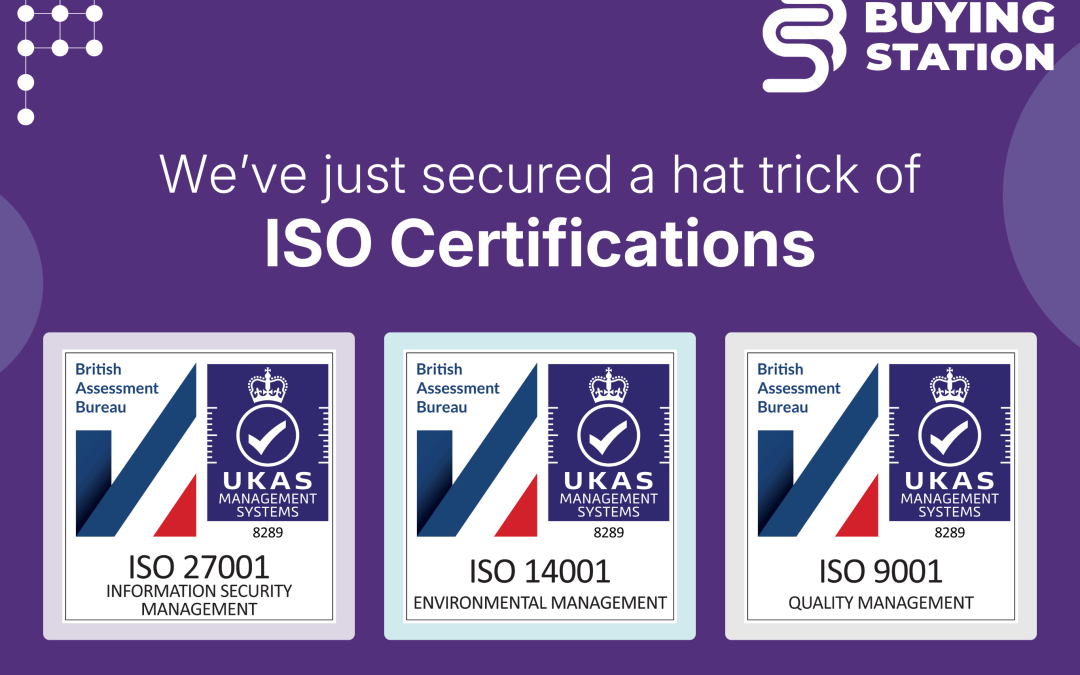
- Security & continuity – How secure is the software? Does the software provider have a business continuity plan? Look for companies that have security baked in, a clear business continuity plan and independent assessments such as ISO certifications. Software companies without these should be scored down.
Step 5: Try it out, take a demo, do a free trial
Think of a demo as a way of getting visibility of all the features, the user interface and the ease of use. You’re looking for something that has a clean user interface and is logical and easy to use.
The next step is to sign up for a free trial. Some S2C software platforms offer sandboxes that you can have a play with. Others offer free trials with no commitment to sign up.
You might want to think about the scenarios you face day-to-day and see if you can set these up easily in the software. Running an RFQ. Reviewing contracts and setting up a renewal process. Reporting ease, such as identifying potential savings. If your baseline needs are met, it will give you confidence to explore further and really test the feature set.
Make sure your team is involved in this so you are sure their specific role can be supported. And, in line with your initial workshop, you can test the potential future solution against the world you operate in now and want to build in the future.
Encourage your team to get involved. Do they find the S2C platform intuitive? Can you see how you will get value quickly and without extensive training? How easily can information be shared with other departments, suppliers and between the team? Would there be a temptation to revert back to what you do now? That’s a big litmus test.
You have selected an S2C software solution. What’s next?
Once you’ve decided upon a solution, it’s time to build a business case.
Step 6: Building a business case
Source‑to‑contract software needs to derive value, which means you will need to build a case for investment.
Focus on:
- Time saved on admin and chasing
- Reduced risk from missed renewals
- Improved negotiation outcomes
- Clearer visibility of savings and commitments
- Better governance and audit readiness
- Stronger supplier relationships
- Data‑led decision making
- Better position to influence growth and cost control
Consider the costs associated with
- Implementation effort
- Training and adoption
- Ongoing support
- Flexibility as you grow
Mid‑market S2C platforms typically offer far better value than enterprise suites, because you are not funding unused functionality.
From Control to Influence
Source-to-contract software gives mid-sized businesses the opportunity to move procurement into a more strategic role within the organisation. It provides the clarity, structure and confidence needed to influence decisions rather than simply respond to them.
By choosing the right‑sized platform, SMEs can:
- Increase efficiency
- Reduce risk
- Save money
- Make better decisions
- Elevate procurement’s place in the organisation
Making this shift requires technology, such as BuyingStation, that makes procurement easier to manage day to day without adding complexity.
BuyingStation was included in the 11 Best Source to Contract Software for Mid-Market 2026 report by Entrepreneurial Procurement, authored by James Meads. The report stated:
“BuyingStation is also one of the most transparent and competitively priced tools on the market and packs a lot into the platform for the price.”
Behind this recognition is a clear philosophy. BuyingStation was built by procurement professionals who understand the realities faced by small and mid-sized teams and the importance of keeping processes simple practical and fit for purpose.
Learn more about our plans and pricing to get started here.
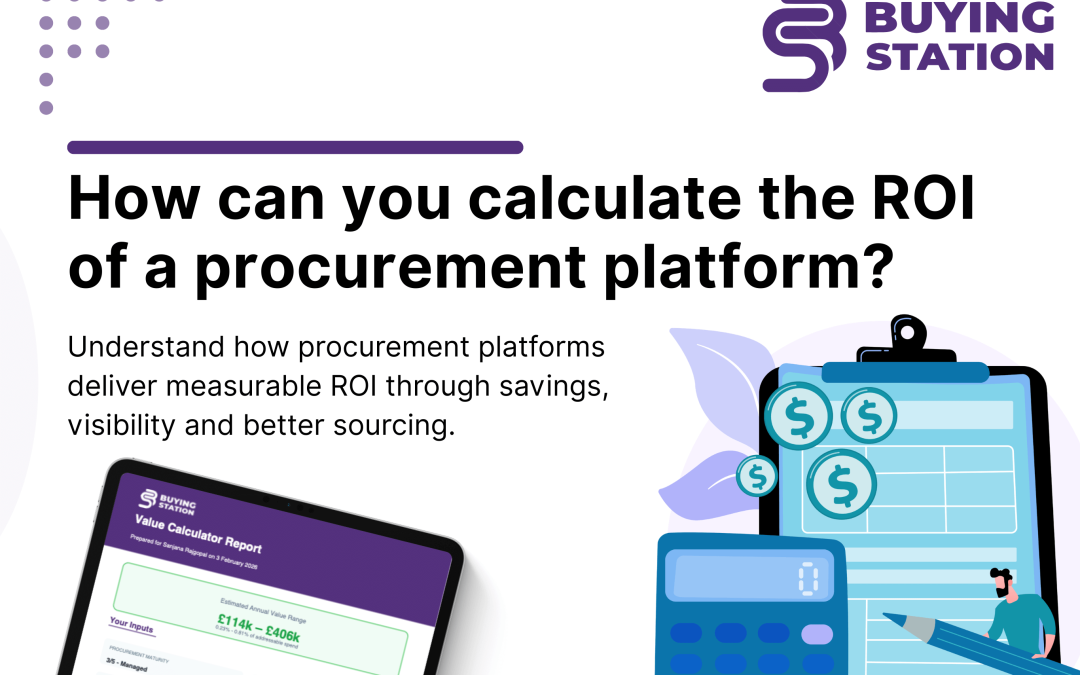
Calculate your ROI!
See the potential savings and efficiency gains of adopting BuyingStation.
Use our ROI Calculator to model the impact on your procurement performance.